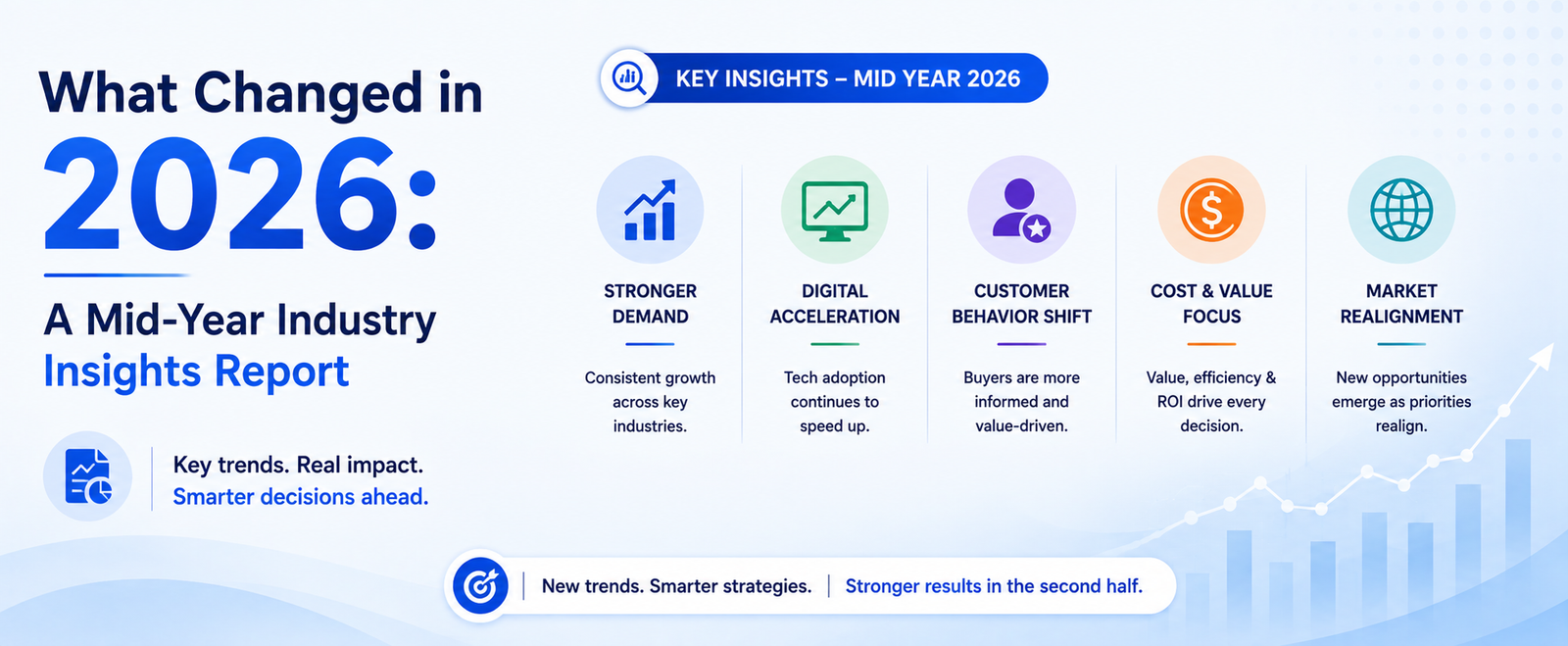
Halfway through 2026, a few patterns stand out across the sectors we track most closely. None of them are dramatic on their own, but together they explain a lot of the pressure businesses have been feeling this year.
1. Demand Is Holding Up, but Becoming More Selective
Demand has held up better than many expected at the start of the year, but it has become more selective.
Customers are still spending, but they're concentrating that spending on vendors who can clearly demonstrate return, rather than spreading budget across several "nice to have" tools.
This has made competitive differentiation more important than it was even a year ago.
2. Pricing Pressure Is Increasing
Pricing pressure has increased in most categories we cover. Buyers are negotiating harder and comparing more alternatives before committing.
This has pushed some companies toward more flexible contract terms, shorter commitment periods, and usage-based pricing instead of flat annual fees.
3. Category Leaders Are Pulling Further Ahead
On the competitive side, the gap between category leaders and everyone else has widened.
Smaller or newer entrants are finding it harder to win purely on price and are instead succeeding by focusing tightly on underserved niches rather than trying to compete broadly.
4. Hiring Is Becoming More Specialized
Talent and hiring patterns have also shifted. Several sectors report slower hiring for generalist roles alongside continued, sometimes aggressive, hiring for specialized technical roles.
This has changed how internal teams are structured and how quickly new initiatives can get staffed.
5. Customer Expectations for Support Are Rising
Customer expectations around support and onboarding have risen sharply. Slow response times or clunky implementation processes are costing renewals in a way that wasn't as visible a couple of years ago.
Switching costs once felt higher and customers were more forgiving, but expectations have shifted significantly.
6. Sharpen Your Value Proposition for H2
Looking ahead to the second half of the year, the businesses in the best position seem to be the ones that treated the first half as a signal to sharpen their value proposition, rather than simply cutting costs and waiting for conditions to improve.
The vendors and teams that used this period to genuinely understand what their best customers value are the ones set up to gain ground while others are still catching up.