Introduction
B2B lead generation usually involves longer decision cycles and multiple stakeholders. A reliable pipeline therefore requires more than collecting contact details from a single campaign.
Define the Ideal Business Customer
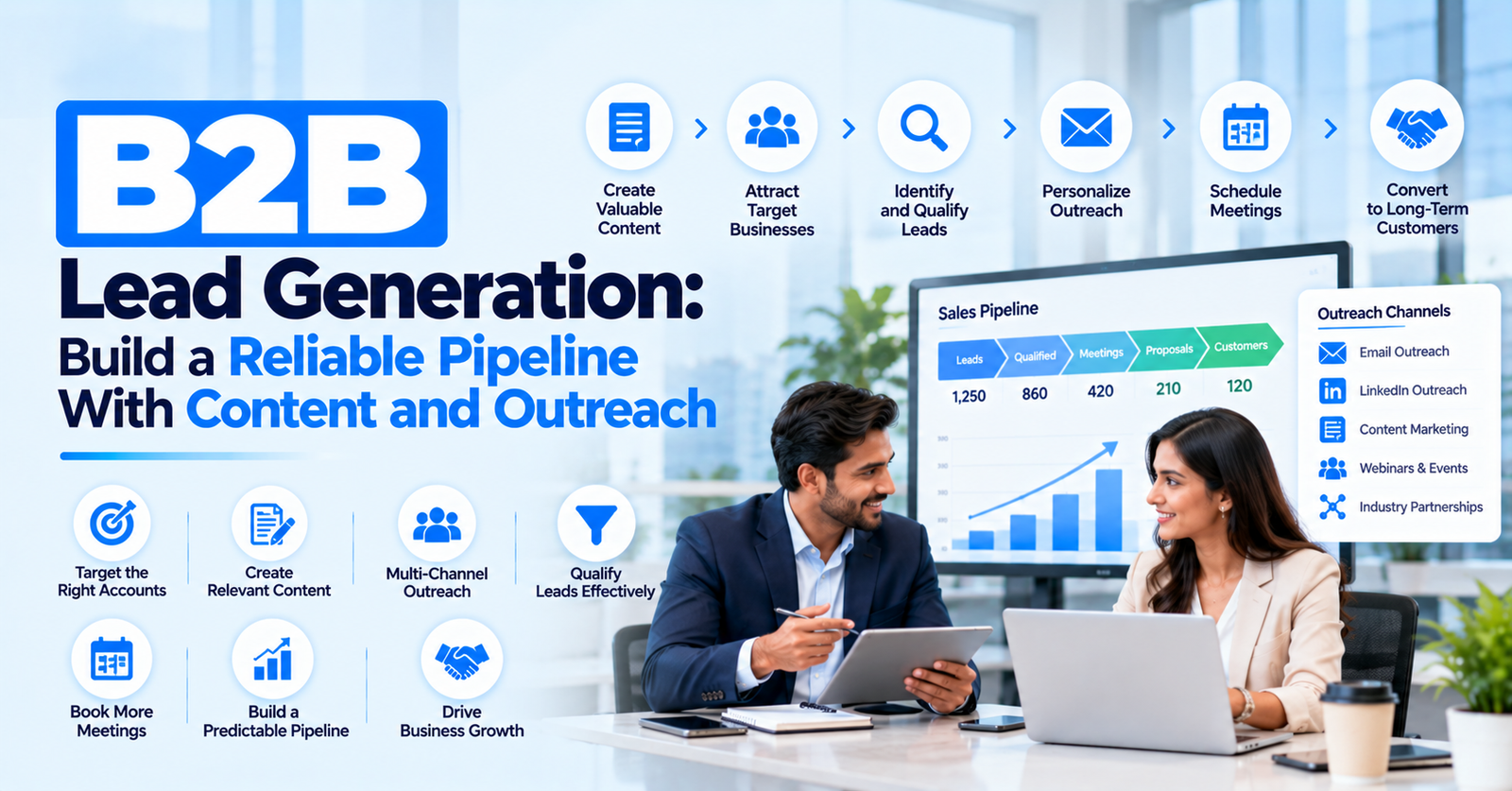
Businesses should define their ideal customer using industry, company size, role, geography, business problem and buying triggers. This profile helps marketing and sales focus on accounts with a genuine fit.
Create Problem-Solving Content
Problem-solving content can demonstrate expertise before the sales conversation begins. Guides, comparisons, checklists and case-based resources can attract prospects who are actively researching a business problem.
Use Targeted Outreach
Targeted outreach works better when it is relevant to the recipient's role and situation. Generic mass messaging can create volume but often produces weak engagement and low-quality conversations.
Qualify Before Scaling
Qualification criteria should be established before scaling acquisition. The team should know what makes a prospect a fit and what information must be confirmed before an opportunity enters the pipeline.
Align Marketing and Sales
Marketing and sales should share definitions and feedback. Sales conversations can reveal which content, industries and customer problems are producing the strongest opportunities.
Conclusion
B2B lead generation improves when targeting, useful content, relevant outreach and structured qualification work as one system.