Introduction
A large lead database does not guarantee revenue. Conversion rate improves when businesses remove friction between the first enquiry and the final customer decision.
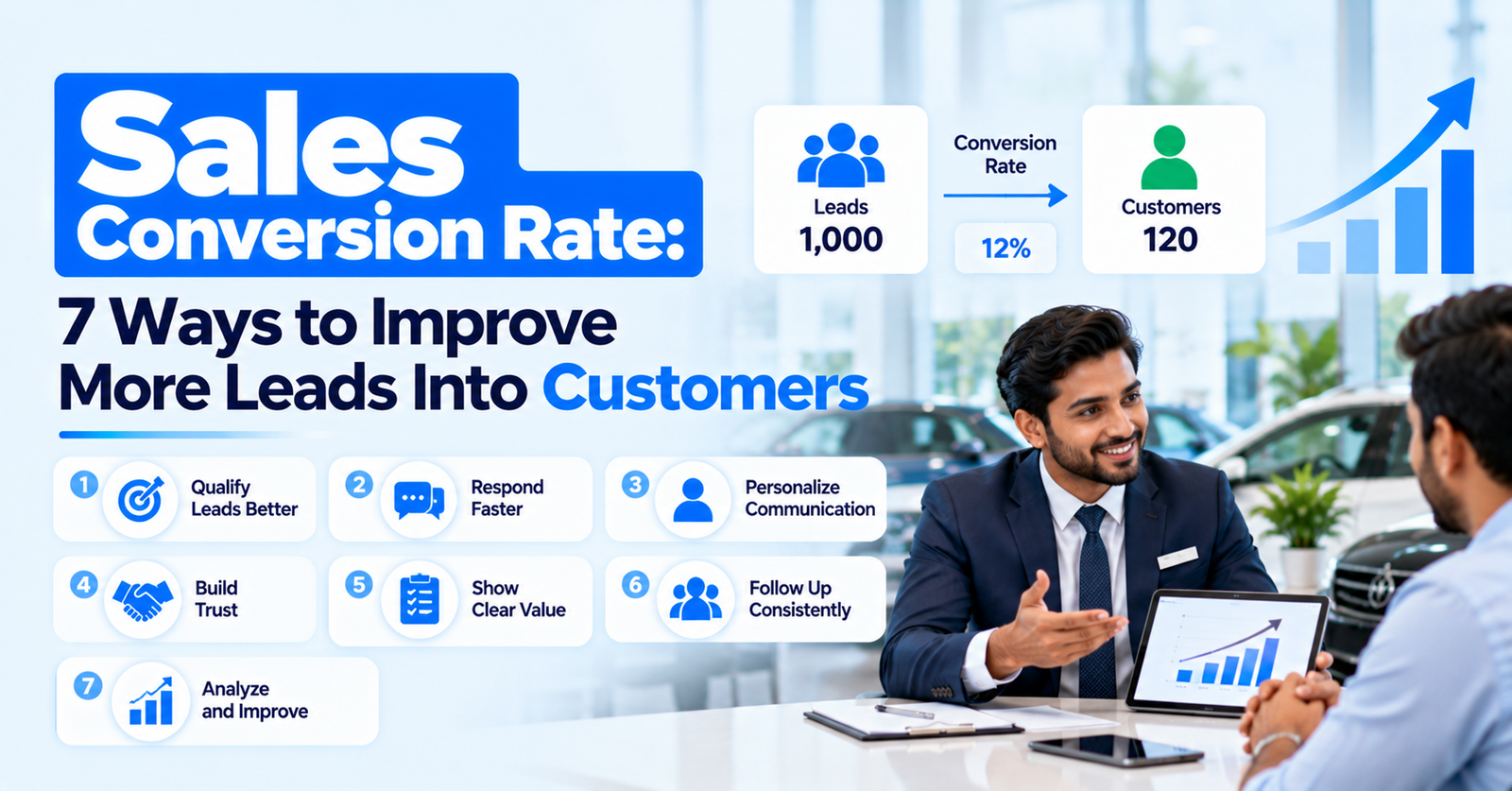
1. Respond Faster
1. Respond Faster: Fresh enquiries should enter a defined response workflow so the right salesperson can act promptly.
2. Improve Qualification
2. Improve Qualification: Sales teams should understand requirement, fit, urgency and other factors that determine whether an enquiry is a realistic opportunity.
3. Match the Offer to the Need
3. Match the Offer to the Need: A relevant proposal is more useful than a generic pitch. Customer requirements should shape the product, package or next step presented.
4. Strengthen Follow-Up
4. Strengthen Follow-Up: Follow-up should be planned and value-led. Each interaction should answer a question or move the opportunity toward an agreed next action.
5. Remove Sales Friction
5. Remove Sales Friction: Complicated forms, unclear pricing processes, slow quotations or difficult appointment booking can create avoidable drop-offs.
6. Review Lost Opportunities
6. Review Lost Opportunities: Lost deals can reveal recurring objections, pricing issues, product gaps or process failures. Recording reasons creates useful learning.
7. Measure by Source
7. Measure by Source: Conversion should be compared by campaign, location, product and sales team where data is available. This helps identify the parts of the funnel that need attention.
Conclusion
Conversion improvement comes from many small process changes. Businesses should test changes, measure downstream results and scale improvements that produce better customers rather than simply more activity.