
Introduction
Lead volume is only one part of acquisition performance. Businesses also need to understand whether enquiries show genuine interest and a realistic possibility of becoming customers.
What Are Intent Signals?
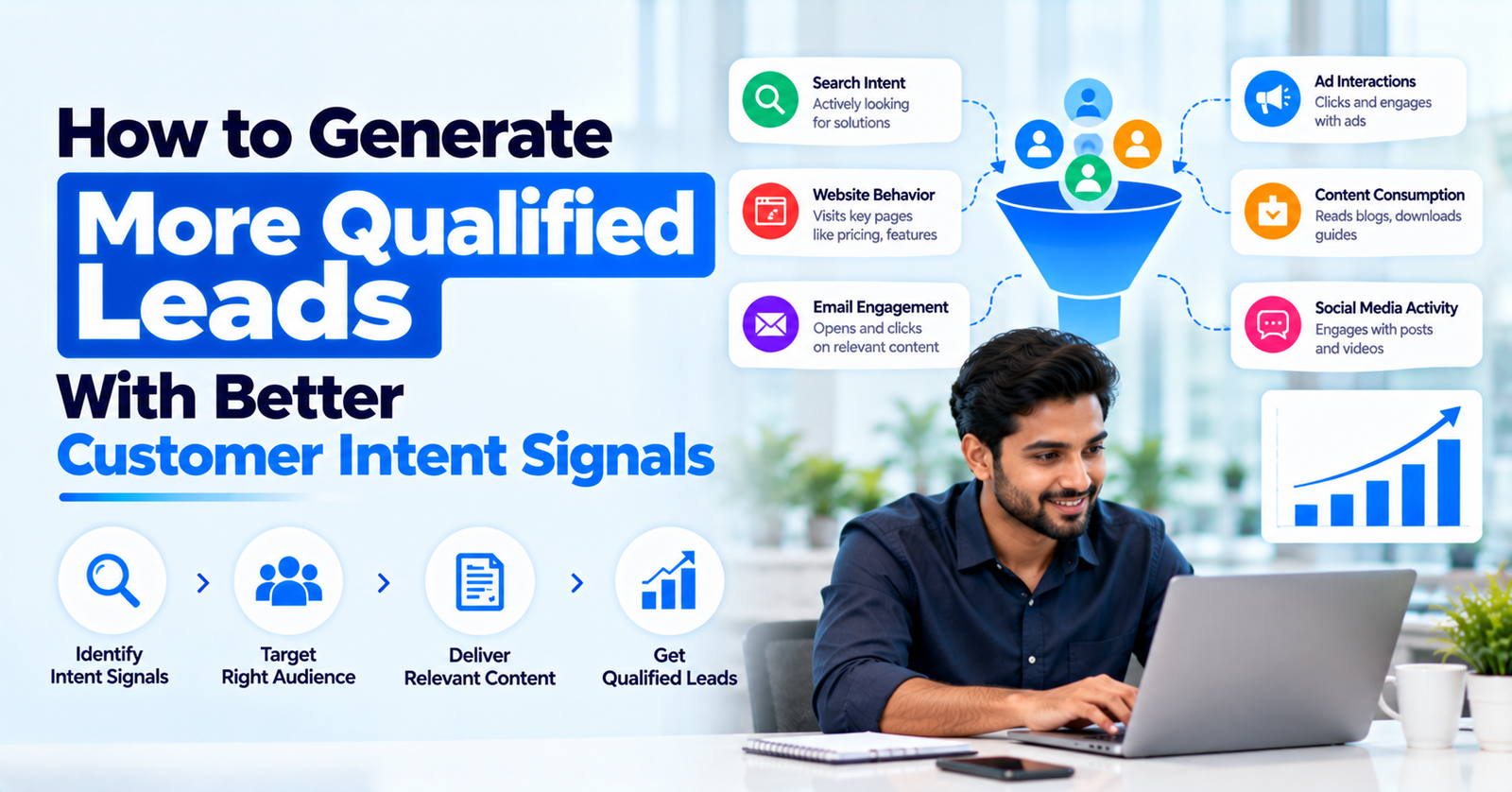
Intent signals can include repeated product-page visits, pricing enquiries, quotation requests, appointment requests, content engagement and direct questions about availability or purchase timing.
Combine Multiple Signals
A single activity should not automatically classify a prospect as high intent. Combining engagement, requirement, location, source and timing can create a more useful qualification picture.
Use Intent in Lead Prioritization
Sales teams can use defined signals to prioritize enquiries that deserve faster attention. The rules should be transparent enough for teams to understand why a lead received a particular priority.
Measure Quality
Compare qualified-lead rate, appointment rate, opportunity rate and customer conversion by source. This shows whether intent-based prioritization is actually improving business outcomes.
Conclusion
Better lead generation is about attracting relevant prospects and identifying useful buying signals. A structured intent framework can help marketing and sales teams focus their effort more effectively.