
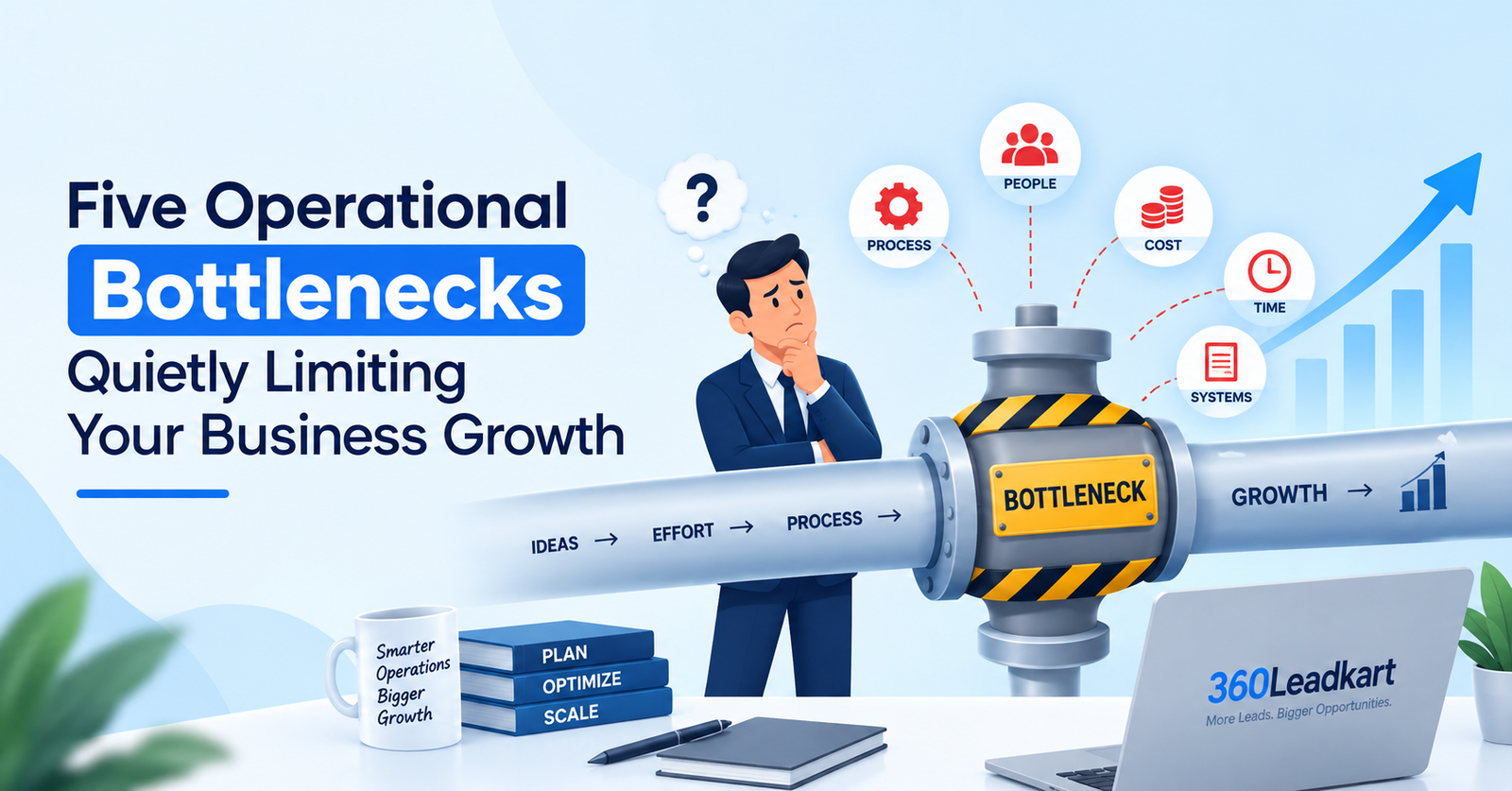
When growth stalls, it's tempting to assume the problem is demand. Often, though, the real limit is internal: a bottleneck in how the business operates that quietly caps how much growth it can actually absorb.
1. Centralized Decision-Making
The first common bottleneck is decision-making that still runs through one or two people. Early on, having a founder approve every decision keeps quality high and mistakes rare.
As the business grows, the same habit turns into a queue, with deals, hires, and projects all waiting on the same few calendars.
Distributing decision-making authority, even imperfectly, usually unlocks more growth than any new marketing initiative.
2. Manual Processes That Don't Scale
Second, manual processes that worked fine at a small scale often become the limiting factor as volume increases.
Spreadsheet-based tracking, manual handoffs between teams, and ad hoc reporting all eat time that should be going toward growth-driving work. The cost is easy to underestimate because it builds up gradually rather than appearing all at once.
3. Unclear Ownership
Third, unclear ownership creates friction that's hard to see from the outside. When it's unclear who owns a customer issue, a project, or a decision, things stall not from lack of effort but from everyone assuming someone else is handling it.
4. Weak Internal Communication
Fourth, weak internal communication becomes a bigger problem as headcount grows.
What used to be solved by overhearing a conversation in a small office now requires deliberate systems. Businesses that don't build those systems see duplicated work, missed handoffs, and slower execution across the board.
5. Hiring at the Wrong Pace
Fifth, hiring ahead of — or too far behind — actual need can both create drag.
Overstaffing before revenue catches up strains cash flow, while understaffing burns out the team that's already stretched thin trying to keep up with growth.
Build Structure Before You Need It
Fixing these bottlenecks rarely requires dramatic change. It usually requires an honest look at where time and decisions get stuck, and a willingness to build slightly more structure before it feels urgently necessary, rather than after growth has already stalled.