
Introduction
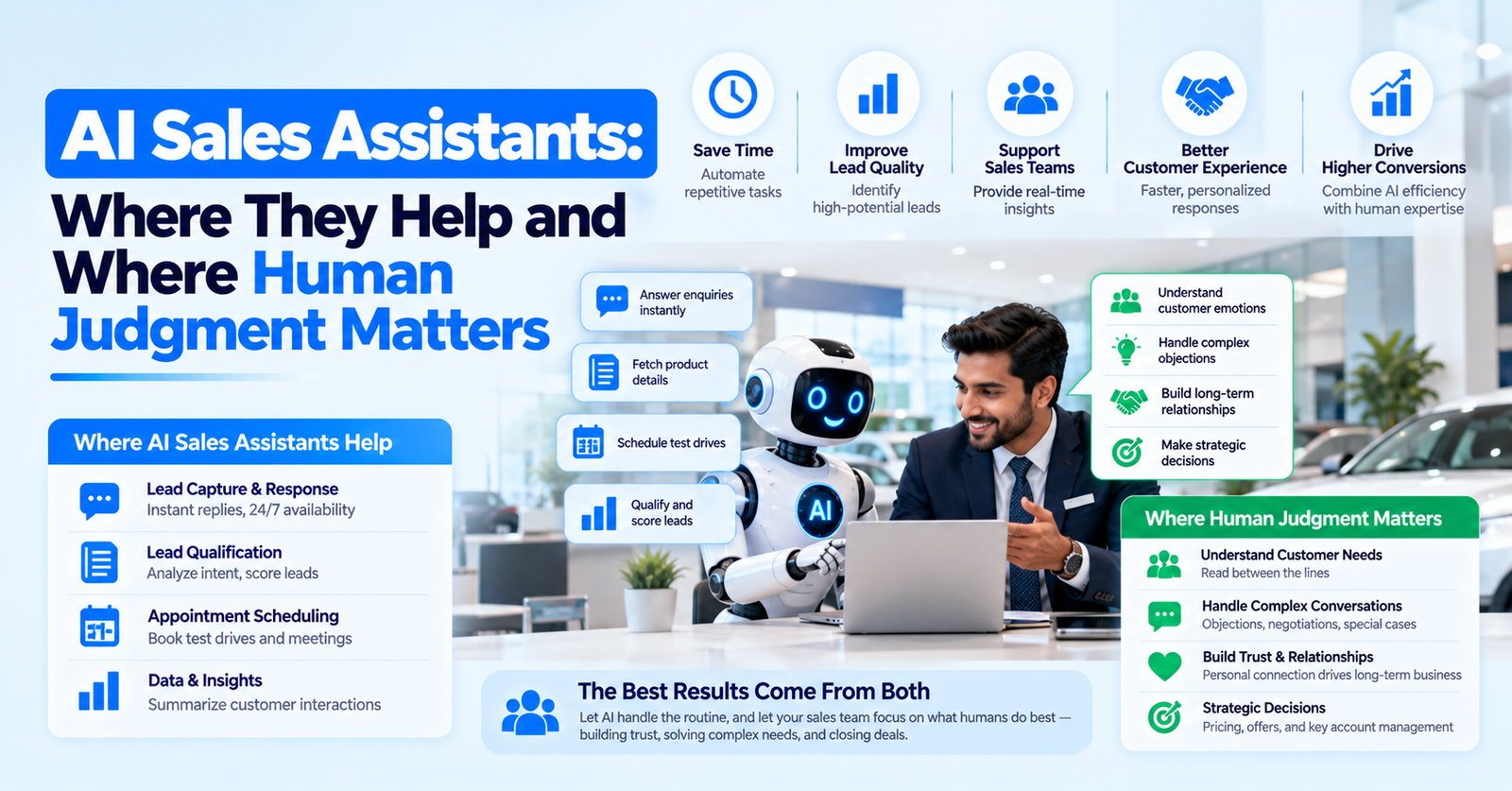
AI sales assistants can reduce repetitive work around the sales process. Their value is strongest when they support representatives rather than pretending to replace every customer interaction.
Research and Preparation
Before a sales conversation, an assistant can help organize available lead information, summarize previous interactions and highlight missing information that the salesperson may need to confirm.
Lead Summaries
Structured summaries can make large lead pipelines easier to review. Sales teams can quickly understand what a customer asked for, what information was shared and what the next action should be.
Follow-Up Support
AI can also help draft follow-up messages or reminders based on the conversation. Human review remains important so communication stays accurate, appropriate and consistent with the brand.
Prioritization
Prioritization can use signals such as engagement, requirement, source and previous activity. The resulting ranking should be treated as decision support rather than an unquestionable verdict.
Human Judgment
Negotiation, sensitive complaints, unusual requirements and high-value decisions often require context that automated systems cannot reliably understand. Salespeople should retain control over important customer decisions.
Conclusion
AI sales assistants can improve productivity when they are integrated into a clear workflow with human oversight, reliable data and measurable outcomes.