
Introduction
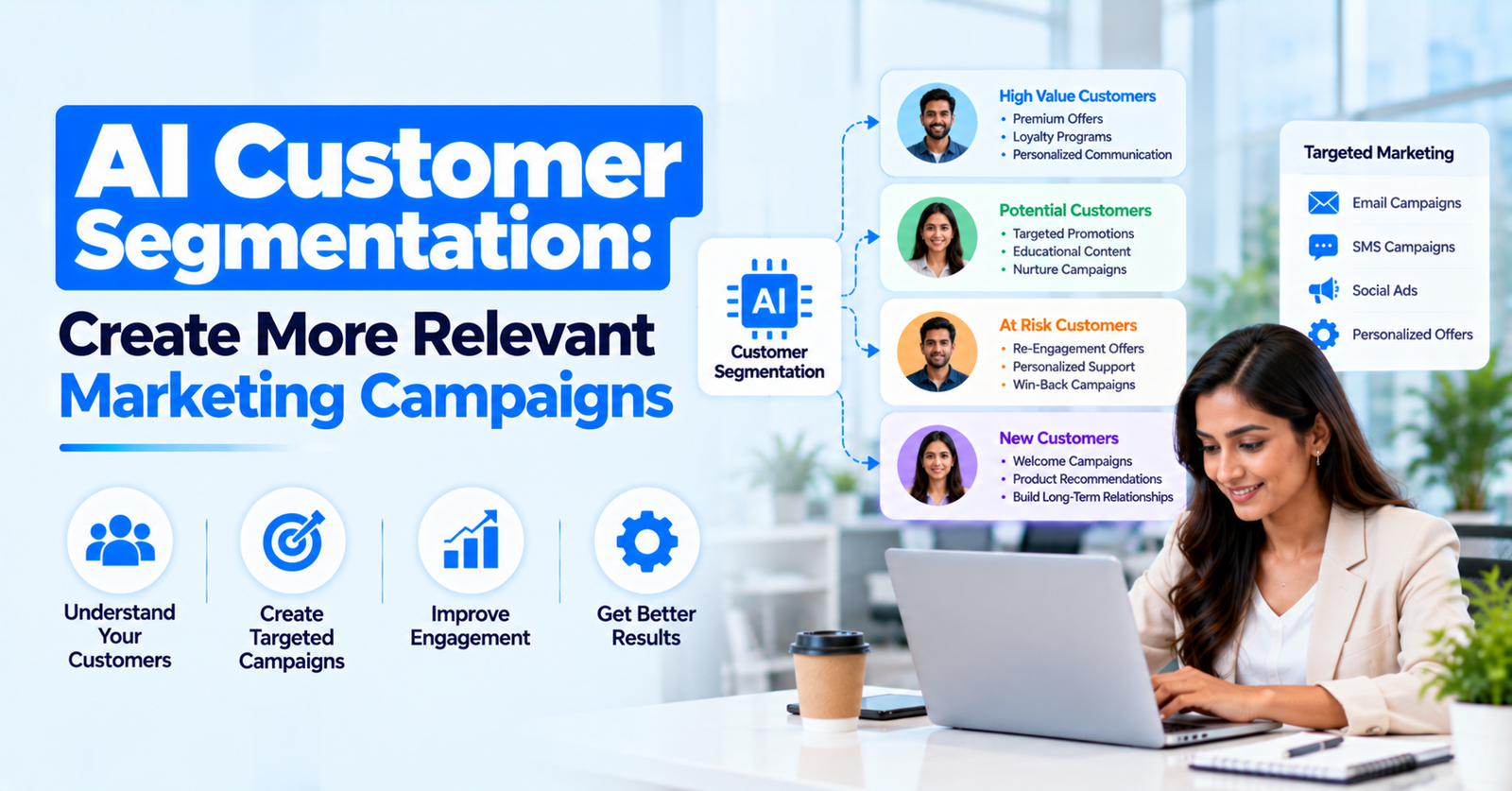
Customer databases often contain different types of prospects with different needs. Sending exactly the same message to everyone can reduce relevance, while useful segmentation can make campaigns more focused.
What Is Customer Segmentation
Segments can be based on factors such as location, product interest, engagement, lifecycle stage, customer type or previous interaction. The correct structure depends on the business model and available data.
Signals AI Can Analyze
AI-assisted systems can analyze patterns across large datasets and identify groups with similar behaviour. These outputs should be reviewed to ensure the segments are meaningful and supported by reliable data.
Create Useful Segments
Useful segments should lead to a practical marketing action. For example, a high-intent group may receive a sales-focused offer while an early-stage research group may receive educational content.
Keep Humans in the Loop
Human review is important when automated segmentation affects customer treatment. Businesses should check data quality, avoid inappropriate assumptions and apply relevant privacy practices.
Measure Segment Performance
Compare engagement, qualified enquiries, conversion and revenue across segments. A segment is valuable when it helps create a measurable improvement, not simply because an algorithm generated it.
Conclusion
AI can make segmentation faster and more scalable, but strategy still determines whether the resulting groups are useful. Good segmentation connects data with a clear customer experience.